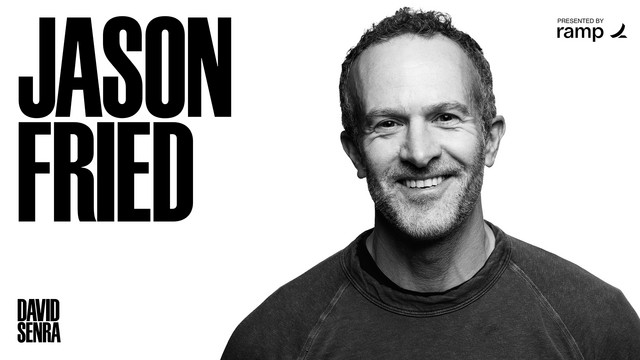
Jason Fried, 37signals (makers of Basecamp, HEY and ONCE)
David Senra·May 8, 2026
OVERVIEW
This podcast episode features Jason Fried, co-founder of 37signals, discussing his unconventional business philosophy. He emphasizes creating products for oneself, maintaining low costs, and fostering small, focused teams. Fried critiques traditional startup culture's obsession with endless growth and "playing entrepreneur," advocating instead for durability, contentment, and a clear focus on product quality and customer connection.
KEY TOPICS
- Product Development Philosophy: Be your own customer and make products you want to use.
- Business Competition: Your real competition is your costs, not other market alternatives.
- Lean Operations: Keep costs low, companies small, and teams tight (e.g., 2-person teams for features).
- Avoiding "Fat": Eliminate unnecessary layers of management and processes.
- The "Envelope and Letter" Metaphor: The business (envelope) should be thin, serving merely to deliver the product (letter), which should be thick with value.
- The "Rocket into Orbit" Metaphor: Aim to get off the ground and then settle into a sustainable orbit, rather than constantly striving for more speed or growth.
- "So What?" Question: Challenge the pursuit of additional growth or optimization beyond a point of comfort and stability.
- Aversion to Optimization: Distinguish between optimizing a product for betterment versus optimizing numbers for profit.
- Authenticity and Directness: Communicate directly with customers, avoid hiding behind corporate structures, and be true to oneself.
- Time as a Filter: Longevity in business signifies something fundamentally right and durable.
- Intuition and Day-by-Day Planning: Trust gut feelings and focus on making good decisions daily, rather than long-term rigid plans.
- The "Great Regression": The observation that complex technology often leads to worse user experiences, and a preference for simpler, timeless designs.
- "Enough is Enough": Finding satisfaction in current achievements rather than a relentless pursuit of more.
- The Value of Optionality: Maintaining options and flexibility rather than committing to a single path, especially in business.
- Importance of Physicality: Drawing inspiration from physical objects and the natural world, and appreciating tangible craftsmanship.
- Psychological Insights: Using personal growth experiences and introspection to inform business and life decisions.
MAIN TAKEAWAYS
- Build for yourself first, and then find others who share your needs; this creates genuine product value.
- Focus obsessively on minimizing costs, as this directly impacts a business's long-term survival and provides more freedom.
- Reject the conventional wisdom of endless growth; sustainability, quality, and contentment are more valuable goals.
- Prioritize clear, direct communication and avoid unnecessary complexity in products and organizational structures.
- Embrace intuition and a flexible, day-by-day approach to decision-making, learning from experience rather than rigid forecasting.
NOTABLE QUOTES
"Your real competition is your costs."
"Make stuff for yourself. There's probably other people out there like you who want what you want, and make it available to sell."
"Software slides downhill. It gets better for a while then slides downhill."
Summarized with DriftNote — AI-powered podcast summaries
Try it free