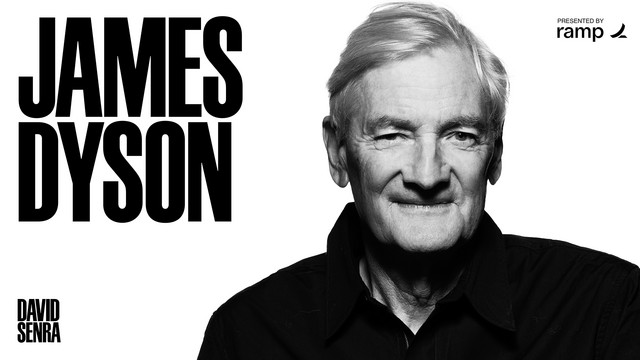
James Dyson, Dyson
David Senra·May 9, 2026
OVERVIEW
The episode features an interview with James Dyson, focusing on his philosophy of invention, entrepreneurship, and the creation of Dyson. It delves into his journey from early struggles and failures to building a global brand, emphasizing the importance of learning from the past, embracing naivety, and relentless iteration. Dyson shares insights into his unique approach to engineering, business management, and education through the Dyson University.
KEY TOPICS
- Obsession with history and learning from the past
- Embracing failure and resilience
- The importance of naivety and questioning existing solutions
- Building Dyson from scratch, including the C-boat and ballbarrow projects
- The challenges and lessons from product development and business scaling
- The Dyson University model and its focus on practical experience
- Risk tolerance and decision-making as an entrepreneur
- The development of the Dyson vacuum cleaner and cyclone technology
- The evolution of Dyson's product lines, including hair dryers and electric cars
- The philosophy of total control in manufacturing and distribution
- The role of intuition and determination in invention
- Personal motivations and upbringing influencing entrepreneurial drive
MAIN TAKEAWAYS
- History offers valuable lessons for present challenges, as human nature often repeats itself. Successful individuals consistently draw insights from historical events and figures.
- Failure is not just inevitable, but a crucial learning opportunity. It's more interesting and provides more insights than immediate success. One must learn to embrace and even enjoy failure to improve and innovate.
- Naivety can be a significant asset in innovation, as it leads to questioning assumptions and exploring unconventional solutions without the biases of past experience.
- Obsession and determination are key drivers for overcoming prolonged struggles in entrepreneurship. Dyson spent 14 years and 5,127 prototypes developing his first vacuum cleaner.
- Controlling the entire process, from design and engineering to manufacturing and sales, allows for complete control over product quality and direction, leading to superior results.
- The Dyson University model highlights the value of integrating practical, hands-on experience with academic learning, challenging traditional education systems.
- High-energy levels and a relentless pursuit of improvement are common traits among successful innovators and entrepreneurs.
- Overcoming personal challenges, such as the loss of a parent at a young age, can foster a high tolerance for risk and a drive to maximize life's potential.
NOTABLE QUOTES
"History repeats itself."
"You have to enjoy failure if you want to improve things."
"Naivety is one of the greatest assets a young entrepreneur or an inventor can have."
"I'm only celebrating that I have the stubbornness of a mule."
"If you're experienced, you know what not to do something. Whereas if you're naive and you're a young engineer... you don't have that negativity towards certain things."
"I don't think that [naivety equals stupidity]. I think that naivety is interesting because you're thinking really hard. How the hell do I do this? I don't know how to solve this problem."
"If I knew how difficult it would be to make Spotify succeed at the beginning, I would not have done that."
"The person who wants it the most, you always choose the person that wants it the most."
"Life can't get much worse, so you're prepared to take risks."
"I always want to do something better. I'm never satisfied."
Summarized with DriftNote — AI-powered podcast summaries
Try it free